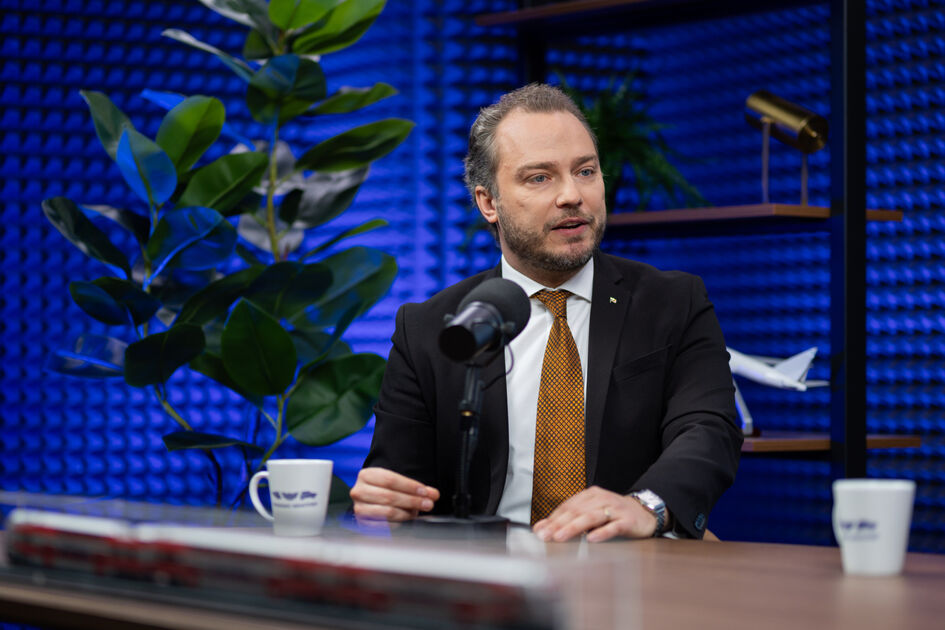
Today, in Vilnius, the 20th Conference of the International Association for Official Statistics (IAOS) continued, bringing together experts in official statistics, data science, academia, and the public sector from around the world. The second day of the Conference focused on discussions about the application of artificial intelligence in statistics, data ethics, the relationship between democracy and trustworthy data, and new methods in official statistics systems.
The second day began with a keynote address delivered by Audronė Jakaitienė, Professor of Vilnius University. The speech emphasized the importance of critical thinking and statistical literacy in the age of artificial intelligence, as well as the need to strengthen society’s ability to responsibly assess data and information.
During the Conference sessions, significant attention was given to the modernization of economic, banking, and labor market statistics. Speakers discussed the use of synthetic data, new public finance indicators, advanced methods for assessing the labor market, and innovative solutions in financial data collection processes.
Discussions also addressed the relationship between official statistics and society, the academic community, and other partners. The sessions examined how cooperation among institutions, universities, and international organizations can help produce higher‑quality statistics that better meet users’ needs.
One of the key themes of the second day was trust in official statistics and its role in democratic societies. Speakers emphasized that independent, transparent, and reliable statistics are essential for making data‑driven decisions and strengthening public trust, especially in the context of the spread of disinformation and rapid technological change.
The Conference also devoted considerable attention to equality statistics, housing data, the assessment of living conditions, and issues of data confidentiality. Participants discussed new methodologies aimed at protecting statistical data while ensuring that they remain accessible for public use and scientific research.
In the sessions dedicated to the application of artificial intelligence and machine learning in official statistics, practical examples were presented showing how advanced algorithms can be used for forecasting, ensuring data quality, and increasing the efficiency of statistical processes. Related ethical and methodological risks were also discussed.
A special GIS and artificial intelligence session was also held on the second day of the Conference, focusing on the application of geographic information systems in official statistics. The session was attended by a representative of the State Data Agency (Statistics Lithuania), OSP project manager Henrikas Krukauskas.
“Today, official statistics increasingly rely not only on traditional data sources, but also on geographic, real-time, and alternative data. GIS technologies and artificial intelligence open up opportunities to create more detailed, timely, and socially relevant statistical insights”, noted H. Krukauskas.
In the evening, the Conference participants gathered for the formal Gala dinner, dedicated to informal networking, strengthening international ties, and expanding professional contacts.
The 2026 IAOS Conference in Vilnius will continue tomorrow, with discussions planned on innovation in statistics, data governance, and the future development of official statistics.
„BNS Spaudos centre“ skelbiami įvairių organizacijų pranešimai žiniasklaidai. Už pranešimų turinį atsako juos paskelbę asmenys bei jų atstovaujamos organizacijos.