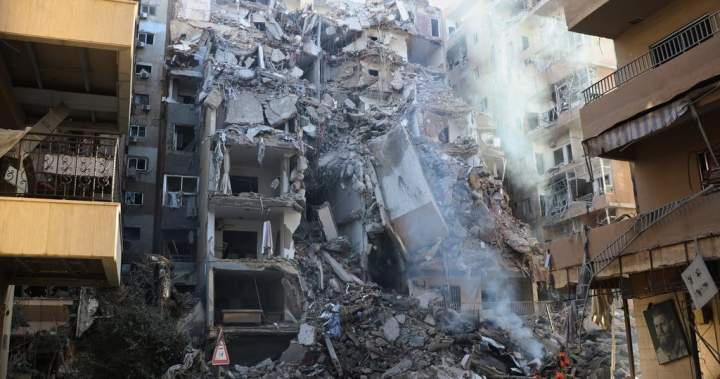
In the past two decades, stories of global disaster and destruction have surged in popular-cultural media: Moira Young’s YA (Young Adult) Blood Red Road novels (2011-2014), Naughty Dog’s game The Last of Us (2013), Chitwood, Ens, & Nichols’s comic Afterburn (2020-21), and Alex Garland’s film 28 Years Later (2025-26), to name few. With extreme weather events rising in frequency and impact, the legacy of Covid, and a surge in authoritarian politics and military conflict across the globe, it is not surprising that the popular-culture industry is tapping into an apocalyptic zeitgeist. The horrors in such narratives often revolve around cosmic catastrophes, pandemics, or runaway technology; yet some find the seed of destruction in the global economic status quo: the ever-ongoing race between powerful nations to own, extract, and control not only the staple foods that feed humanity but also the resources that feed the insatiable mass-production and consumption industry, like oil and rare-earth materials.
As Downey et al. (2010) explain: “because of their position in the world system hierarchy, core nations are able to take advantage not only of the labor power but also of the natural resource wealth of periphery nations, while simultaneously exporting many environmentally degrading activities to the periphery” (417). What is more, past colonial and present neocolonial practices have shown that “armed violence and militarism play (a structural role) in degrading the environment and securing core nation access to developing nation natural resources” (Downey et al. 2010, 418-19). Films such as Avatar (2009), The Colony (2013), and Dune (2021-2024), The Expanse novels by James S. A. Corey, as well as the graphic novel Travelling to Mars (2024), explore the challenges, dangers, and long-term social, environmental, and political impact of large-scale resource extraction to human civilization, often with grim predictions of near-future collapse.
Two recent entries in the economic-apocalypse subgenre are Chen Qiufan’s novel Waste Tide (English translation 2019), and the latest chapter in George Miller’s Mad Max saga: Furiosa (2024). Both texts foreground the social and political violence inherent in human resource extraction, production, and use; through harrowing representations of environmental and communal breakdown both texts suggest the economic apocalypse is coming not despite but because of the globalisation of neoliberal industrialism. Hall & Lamont (2013) point out that the global economic status quo has engendered “structural insecurity and rising inequality” (3) by championing “heightened competition in more open markets” (3) fuelled by “declining confidence in the capacity of states to allocate resources efficiently” (4) and growing “individualization of risk, responsibility, and reward” (6). Both texts narrate a race to the bottom between small-groups of like-minded and equally selfish people, aiming only to live in relative comfort and ease just that little bit longer than the rest, before the inevitable end. Yet in their different forms – an epic action-adventure story and a cerebral speculative fiction – Furiosa and Waste Tide present different attitudes towards the oncoming end.
On the face of it, Waste Tide and Furiosa seem to give the lie to neoliberal shibboleths such as the necessity to ever-expand global production and trade, to technologically innovate for maximum socioeconomic efficiency. Both texts imply that the neoliberal status quo resembles Thomas Hobbes’s “state of nature” in which everybody “endeavour(s) to destroy, or subdue one an other (sic)” in a persistent “warre (sic)… of every man, against every man” (1651 (1996), 87-88). I will argue, however, that where Waste Tide’s frequently surreal and reflective figurative language allows it to appeal emotionally to the reader’s moral sense and the need for greater altruism and less competition, Furiosa’s cynical acceptance of humanity’s innate enmity leads it to perform what Johan Galtung (1990) terms “cultural violence,” a mediated form of violent representation that “makes direct and structural violence look, even feel, right – or at least not wrong” (1). I am not saying that Furiosa glorifies this violence; rather the opposite is true: it is a tragedy that laments humanity’s enmity, but in its focus on physical and mental violence, themes of greed, torture, and revenge, and its despair concerning humanity’s fatal flaw, it also normalises the violence and destruction that result from it. There can be no other way with humanity, the History Man suggests at the close of the film: “there always was, is, and will be war” (117:40).
The latest “Mad Max” film’s ambivalent stance towards civilization’s collapse and its moments of cultural violence are shaped by what Niklas Salmose (2018) defines as “the action apocalyptic sublime” (1419), an aesthetic he contrasts to “the poetic apocalyptic sublime” (1422). In both modes of representation, “the sense of the apocalyptic grants the sublime an immediate existential angst where diegetic humans are not only observers but also victims” (Salmose 2018, 1418-19). But in the action mode “the apocalypse of the world is haunting and cool, supported by a pompous musical score” (1420), for instance. By contrast, the poetic mode is “non-narrative. It opens an opportunity for feeling the true angst of the destruction” (1423), which facilitates contemplation of the ethics involved in establishing the economic origins of the apocalypse. According to Salmose, the “potentially positive outcome” of any apocalyptic narrative “is severely diminished by (the) limitations of the narrative structure of the Hollywood mainstream adventure film” (1422), a genre to which Furiosa belongs. Such a film’s “spectacular, affective scenes” of apocalyptic events, “must … be placed within (a) generic adventure narrative” (Salmose 2018, 1424).
These stories feature ordinary, small, protagonists whose character arc allows them to develop into larger-than-life heroes or heroines who take on a David vs. Goliath struggle, are nearly defeated but ultimately achieve a moral victory, even if this comes at great cost. According to Salmose, “dependence on the formulaic release of tension and the victorious protagonist in the third act … diminishes audiences’ real fear of the apocalypse” (2018, 1424), which also validates the violent action to some extent as the violence leads to the evil being defeated, for now. The final victory, leaves the audience on an emotional high, feeling a proper resolution has been achieved, which hinders the development of critical reflection on the causes of the apocalypse and its relation to human institutions and practices. By contrast, the poetic mode, according to Salmose, halts action by foregrounding introspection and moral contemplation of the social, economic, and political institutions that structure the society on the brink of apocalyptic. This mode allows the audience do develop more critical insight and potential agency because heroism in competition and conflict, as well as any sense of victory is displaced. In Waste Tide, everybody loses, and rather than a race to victory, there is a dance of death which cajoles the reader to recast the apocalyptic tendencies of the neoliberal status quo not as an inevitable, but as a potential future that must be averted at all cost by a new model based on cooperation and sharing, rather than an inherently competitive and conflict-ridden “state of nature,” on plenitude rather than growth through exploitation.
The Neoliberal Economy and/as the State of Nature
Before exploring the crumbling and violentworlds of Furiosa and Waste Tide, it is useful to outline the “state of nature,” as explicated by several Hobbes scholars. Hoekstra (2007) explains that the basic mental and physical equality amongst humans in state of nature gives everyone “equal hope of attaining what they desire” (110). Yet any desirable goods and resources are always “in relatively short supply,” making competition and rivalry inherent aspects of lived experience (Newey n.p.). Inherent rivalry, in turn, leads people to “naturally endeavour to dominate one another” (Jaede 2015, 56) to ensure self-preservation. The “state of nature” is thus not a theory of “savage” origins from which civilization develops, but a theory of anarchy, in the sense of a lawless state in which everybody needs to fend for themselves and competes with others for survival. This invokes Hall & Lamont’s argument about neoliberal ideology, which “generally leads people to think of themselves as governed less by others and more by themselves” (2013, 9).
To some extent, this is what happened after “advanced capitalist countries had dismantled or watered down their regulatory states by privatizing publicly owned enterprises, lifting capital controls, deregulating markets, and more selectively, par(ed) back welfare guarantees” (Evans & Sewell Jr, qtd in Hall & Lamont 2013, 35). In this new status quo, self-reliance, and competitive self-interest become key character traits for realising the so-called good life. For Hobbes “competitiveness is a fundamental aspect of the concept of natural enmity”; here, enmity should be understood as “the inherent feeling of hostility that exists between all in the state of nature” (Jaede 2015, 56). As the current economic, often militarised (see Downey et al. 2010, 422), battles over oil and rare-earth materials playing out across the globe illustrate, enmity is very much an aspect of the globalised neoliberal economy. Where Furiosa’s world of epic battles, explosions, revenge plots, and ingenious cruelties affirms Hobbes’s notion of natural enmity in humanity, Waste Tide, by contrast, places specific man-made institutions at the core of enmity, suggesting that the dismantling of hierarchies of social, political, and economic power can lead towards a more just, peaceful and sustainable world based on altruism not enmity as a core value.
Furiosa: riding the apocalyptic roller-coaster
The opening voice-over of Furiosa – voiced by the character History Man – foregrounds the Hobbesian nature of the apocalyptic narrative: “as the world falls around us, how must we brave its cruelties?” (1:10). In Furiosa, the total collapse of human civilization is inevitable because humanity’s natural enmity will overpower its penchant for altruism, benevolence, and forgiveness. The innocent child of the utopian Green Place, the young Furiosa, develops into a ruthless and vengeful warrior intent on a personal moral victory by means of cruel torture. At the climax, the broken yet living body of the film’s Goliath – Dementus – becomes the fertile soil from which grows a peach tree that will bear new fruit. This image suggests, albeit grotesquely, that a new world could arise out of the remnants of the old. However, during the film, Furiosa has developed a character similar to Dementus’s; she is ready to use the most extreme forms of violence and cruelty to survive and protect her own. She plucks the first fruit from the tree whilst Dementus is still alive, symbolically reproducing the exploitation and destruction of one human body to ensure production of goods to sustain another, what Subhabrata Bobby Bannerjee calls “necrocapitalism.” The nature of her revenge implies the perpetuation of the wasteland’s status quo: humans will continue to feed the economic machine until either humanity has destroyed itself, or resources have finally dried up entirely. Furiosa’s character arc from innocent abductee to fierce and feared Amazonian warrior is epic in scope and cinematically thrilling, but it also normalises the Hobbesian state of nature by presenting its many and gruesomely violent acts as inevitable because they are intrinsically human acts.
Yet at the outset of the film, one group of people have managed to establish a peaceful commonwealth. The Green Place, Furiosa’s childhood home, has strict rules that need to be always obeyed; but it is clear to all citizens that obedience is crucial to survival. This is the last “place of abundance” (12:23) sought after by the individual marauders and war-mongering gangs in the wasteland. But even the good life in this society does not stop Furiosa from disobeying the law, treading out of bounds to sabotage a gang of hunters, only to find herself abducted and trapped in the cutthroat world of the wasteland, ruled by gas-guzzling tyrants. Audiences familiar with the previous film, Fury Road (2015), to which Furiosa is a direct prequel, already know that the Green Place is doomed to exhaustion, like most resource-rich environments on the planet. When Furiosa finally returns, her green and pleasant home has become a dismal swamp inhabited by seven survivors.
The Green Place of plenitude is a genuine alternative to the militaristic and exploitative wasteland, peopled by 1) the roaming biker-gang leader, Dementus, and his Congress of Destruction, 2) the nameless oil tycoon of Gastown, 3) Immortan Joe and his Citadel of Sustenance, and 4) the Bullet Farm, run by Major Kalashnikov, named after one of the most ubiquitous, because most reliable, weapons in human history, first produced in the Soviet Union, but later manufactured globally, also in the USA. The Green Place’s destruction, in Fury Road, suggests the film sees it not as a potential future, but a nostalgic myth, a romantic dream of a pre-industrial golden age that was never truly real, a strange aberration from the norm. By contrast, the four grotesque, authoritarian, strongholds, in perpetual war with each other over resources, represent absolute reality; they also resemble the some of the most powerful industries in the current neoliberal era: motor vehicles, oil, weapons, and food. Their innate animosity illustrates the suggestion made by Downey et al. “that in most instances, rebels, corporations, and states use violence or the threat of violence in association with resource extraction activities to achieve their own goals, such as enriching themselves, increasing their power over others, maintaining social stability, or securing good relations with other actors” (2010, 22). Dementus champions individual, competitive, entrepreneurship when he says: “we are indeed in the land of opportunity” (40:01). Yet, after his military take-over of Gastown, he despairs about a business venture gone wrong: “we can’t keep up supply, everyone is saying they’re being swindled and short-changed” (85:07).
In its depiction of how all the wasteland tyrants seek control over Gastown, the film satirically illustrates the claim made by Downey et al. that “military violence and military aid” indeed “play a critical role in facilitating petroleum extraction and transport and in allowing the United States to maintain control over petroleum supplies” (2010, 436), a scenario playing out right now in South America and the Middle East. Like Donald Trump and other militaristic world leaders, Immortan Joe is hellbent on building bigger, stronger, and faster war rigs – Furiosa aids him in this endeavour – and has a penchant to technologize everything within his grasp. He employs the knowledge and skills of the “organic mechanic” to maximize his yield, as does Furiosa who first enhances her butchered left arm into a mechanical weapon and eventually transforms the body of Dementus into fertilizer to avenge her mother’s death. Significantly, at the end Fury Road, the second part of Furiosa’s life story, when all the male tyrants have been slain, Furiosa is left in possession of Immortan Joe’s Citadel, having structurally taken his place in the wasteland’s state of nature. With Furiosa inheriting Immortan Joe’s position and power, the franchise suggests that the incessant war for scarce resources will continue until everything has been used up and there is nothing left to fight over but barren sand. Furiosa’s abduction from home turned out to be a move from utopia to reality as not the Green Place but the apocalyptic wasteland presents humankind in its natural environment, making the apocalypse frighteningly but also thrillingly inevitable.
Waste Tide: a poetic meditation on altruism
Research has revealed that “the mining of rare earth minerals produces as much as 2,000 tons of solid waste, including toxic heavy metals and radioactive thorium, for every ton of rare earth mineral produced” (Downey et al. 2010, 421). Waste Tide features various organisations involved in the running and exploiting of a Chinese e-waste processing plant on Silicon Isle. Local government officials, an organised crime syndicate, and an American recycling corporation vie with each other for control of the exploitation of the waste people who manage the technological offal. The novel tells two stories: 1) the magical story of Mimi’s transformation from a waste girl into an altruistic leader of a people’s rebellion with two distinct consciousnesses; and 2) the American businessman Scott Brandle’s discovery of the dark secret behind TerraGreen’s aim to monopolize Silicon Isle’s “rare earth metals, nonrenewable resources more precious than gold,” which in the digital age are “like the witch’s magical dust in fairy tales” (216), giving their possessor the ability to gain massive advantages, technologically, economically, and militarily. Scott realises that despite the altruistic sheen of TerraGreen’s marketing double speak, “his actions” are “mercenary, despicable, even evil” (322), because “the pollution generated by the process” of the company’s so-called recycling “far exceeded EPA standards” (218), and the workers on Silicon Isle are physically and mentally mutating due to their total immersion in the toxic environment. The novel’s eye-opening power lies not in the way it dramatizes the ongoing battle over Silicon Isle’s rare earth materials, but in its focus on poetically expressing the physical suffering and psychological transformation of the coerced and exploited waste people.
The simile “Long Prosperity’s crew continued to spray the man with the high-pressure hose, treating him as a living flame spreading up the rope ladder” (5) foregrounds the irony and moral double standards at work within the e-waste trade. It is true that the ship, Long Prosperity, is bringing so-called wealth to Silicon Isle, in the shape of techno-junk; and the eco-warrior on the rope-ladder is indeed a danger to the ship’s success and thus needs to be nullified. But as a living flame, “the man” is also a cleansing power, intent on eradicating this mock-prosperity (all waste people live in dire poverty) based on the spread of toxicity. A metaphor on the next page clarifies the novel’s ethics regarding resource exploitation: “the most precious perfume, when made at the price of the extinction of a species, would turn into an intolerable stench” (6). Such moments of figurative language force the reader to contemplate the harsh truth underlying the digital revolution and the throw-away consumer society it supports with myriads of luxury gadgets, fast fashions, and instant foods. The global consumer-society makes life more efficient and comfortable for the affluent few at the expense of the wellbeing and welfare of the impoverished many. An extended simile describing the waste people foregrounds their dehumanisation by the waste of consumer-society: “Metal chassis, broken displays, circuit boards, plastic components, and wires … were scattered everywhere like piles of manure, with laborers, all of them migrants from elsewhere in China, flitting between the piles like flies” (28). Flies lay their eggs in manure, which is therefore the soil from which they spring. The simile is so apt here because the immigrant waste people too are presented as reliant for the survival of their kind on the continual production of waste by another.
Those who have lived and worked on Silicon Isle for long are becoming one with the waste they manage and burn, incorporating elements of discarded tech into their very physical being which directly affects their mental state. Their children “seemed to think this was the natural world” (29). When the waste-girl Mimi is violated by thugs and undergoes a near-death experience, her consciousness magically merges with the husk of a discarded mecha (a giant robot): “like a soul embedded into a strange new body” (174). Mimi feels how “the invisible cilia of electricity gently brushed across billions of neurons and agitated crystal blue ripples, which extended and spread along a complicated three-dimensional topology”; then “as her exoskeleton trembled, the starlike lights vibrated in sync, demonstrating their reality. The sky was a pale green and the sea indigo; wherever she looked, the center of her visual field became bright and limpid, with strongly defined outlines and clear details; however, the view grew dimmer and fuzzier in a radiating pattern from the center, distorted as though seen through the rim of a lens. All she heard was silence, as though the special alloy in the shell absorbed and filtered out all sound” (175).
The supernatural trope of the transmigration of souls allows Chen Qiufan to imaginatively represent the freeing of the human soul from the constrictions of its body, but also from repressive ideologies. Returned to her original human frame, Mimi realises that the label of waste girl “had been branded in her heart” so deeply that it was “impossible to erase” (243), but now “she felt this world differently” (245). Similarly, when Scott’s guide and translator, Kaizong, receives a mechanical eye, after being blinded by a waste person, he realises that “he hadn’t just changed one eye; his entire world had changed” (318). Only after their humanity has fused with the technology that surrounds them on all sides, do Mimi and Kaizong fully understand the essence and impact of their tech-driven world: technology equals power, and “people now worshipped power far more than honesty, kindness, virtue” (320), spiritual values impossible to artificially reproduce and monetise. At the climax of the novel, when the waste people rebel, “the thugs” wearing “quality equipment” set “their augmented muscles to the maximum enhancement” (380) and engage in “the mechanical, repetitive act of killing” (381). As these technologically empowered humans indiscriminately hack their way through the rebelling waste people, Mimi can breathe life into the mecha once more by fusing her second consciousness with its electronic systems. The mechanised humans are no match for the humanized robot, and Mecha-Mimi gains a victory in battle like Furiosa.
While both heroines defeat evil tyrants, Waste Tide’s denouement is not marked by the satisfaction of a revenge well plotted, and a realisation that war is human nature. Instead, it marks a turn towards altruism. Waste Tide ends with a scene of transformation from conflict to benevolence, from competitive individualism to an embrace of community. Only the soulless killers who directly threaten life on Silicon Isle are despatched by Mecha-Mimi. As a violent typhoon sweeps Silicon Isle, human Mimi convinces her allies to try to save all people still alive, whether they are government employees, gangsters, businessmen, or anyone else who has oppressed and exploited the waste people as disposable tools in the past. By inhabiting the technological Mecha and experiencing its destructive power first hand, the human Mimi has learned that “if we allow ourselves to be filled with hatred, then they’ve won” (393); they are all those on Silicon Isle who had accepted the international economic status quo as a state of nature, who thought “of life as some zero-sum game in which there must be winners and losers, even at the expense of the interests of others, including their lives” (408), a state taken for granted as natural by everyone in the wastelands of Furiosa.
Such a proverbial state of nature, like Hobbes’s theory, is a lawless existence in which those who wield most power will win. This is not a benevolent but a ruthless power that expresses itself through greed and a desire to possess and exploit. This power feeds on Hobbes’s natural enmity. Significantly, where Furiosa presented this state of nature as definitive of humanity, Waste Tide posits it within an ideological construct embodied by a corrupt government, organised crime, and the voracious TerraGreen Recycling corporation, which enjoys the status of personhood and can take on the guise of a sovereign when it gains a monopoly position in the market, but which remains necrocapitalist by valuing power and profit over human and environmental wellbeing.
References
Banerjee, Subhabrata Bobby. “Necrocapitalism.” Organization Studies, vol. 29, 2008, pp. 1541-1563.
Downey, Liam, et al. “Natural Resource Extraction, Armed Violence, and Environmental
Degradation.” Organization & Environment, vol. 23, no. 4, 2010, pp. 417-445.
Galtung, Johan. “Cultural Violence.” Journal of Peace Research, vol. 27, no. 3, 1990, pp. 291-305.
Hall, Peter A and Michelle Lamont, editors. Social Resilience in the Neoliberal Era. Cambridge UP, 2013.
Hobbes, Thomas. Leviathan. Edited by Richard Tuck, Cambridge UP, 1996.
Hoekstra, Kinch. “Hobbes on the Natural Condition of Mankind.” The Cambridge Companion to Hobbes’s Leviathan, edited by Patricia Springborg, Cambridge UP, 2007, pp. 109-127
Jaede, Maximilian. The Concept of Enmity in the Political Philosophy of Hobbes. PhD
Dissertation, University of St Andrews, 2015.
Newey, Glen. The Routledge Guidebook to Hobbes’ Leviathan. Routledge, 2014.
Salmose, Niklas. “The Apocalyptic Sublime: Anthropocene Representation and Environmental Agency in Hollywood Action-Adventure Cli-Fi Films.” Journal of Popular Culture, vol. 51, no. 6, 2018, pp. 1415-1433.
Further Reading on E-International Relations